0.2.0
- Sample photos that showed third-party brands replaced with original artwork.
- Ships under the Autonnel Marketplace Commercial License: LICENSE file included, package.json licence field points to it.
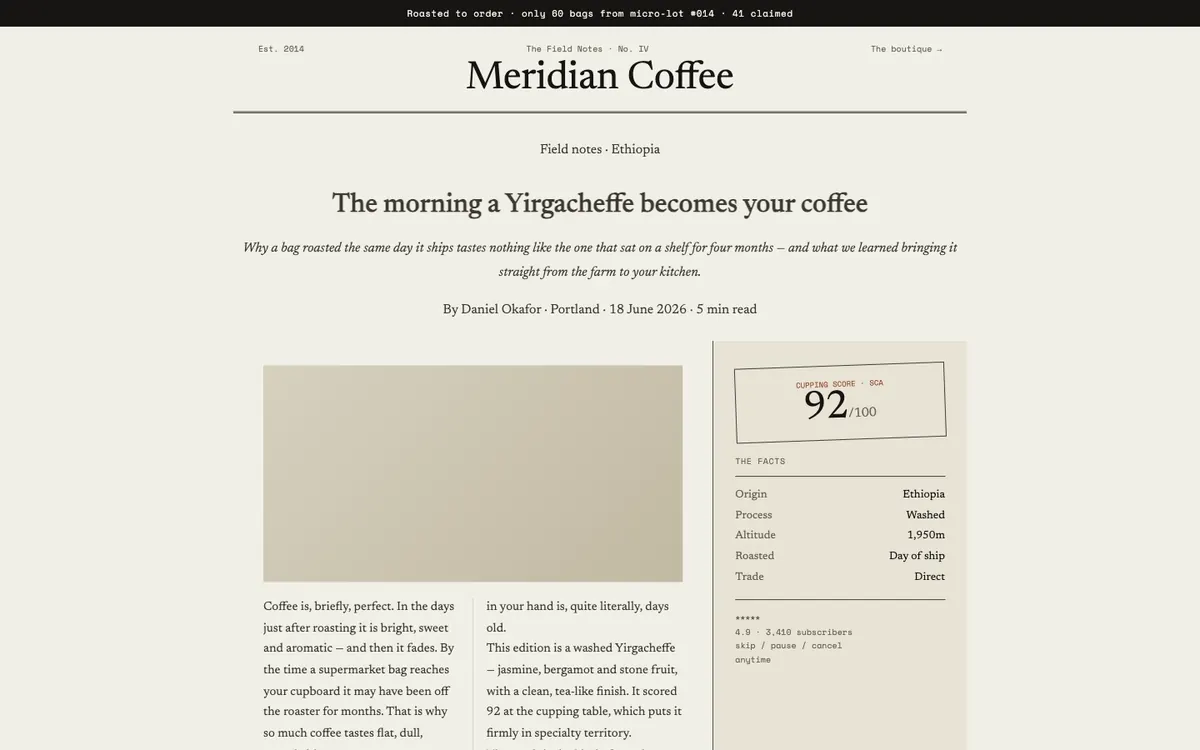
Meridian is a brutalist, newsprint-style funnel for a specialty coffee roaster that sells subscriptions. The landing page reads like a newspaper feature about one micro-lot, with a facts table (origin, process, altitude) and a cupping-score badge.
The checkout uses a vertical numbered step rail and a subscribe-and-save plan selector, and the thank-you page tracks the roast. The pack adds four page templates and five Meridian blocks to the Autonnel editor.
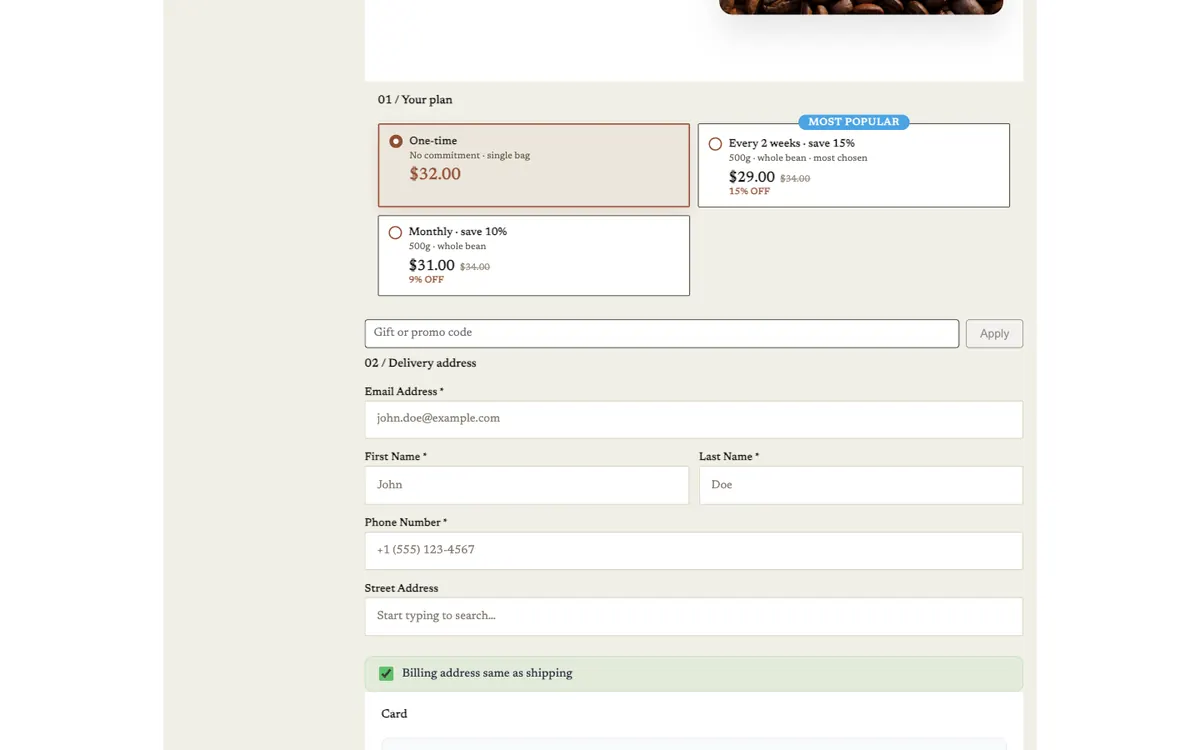
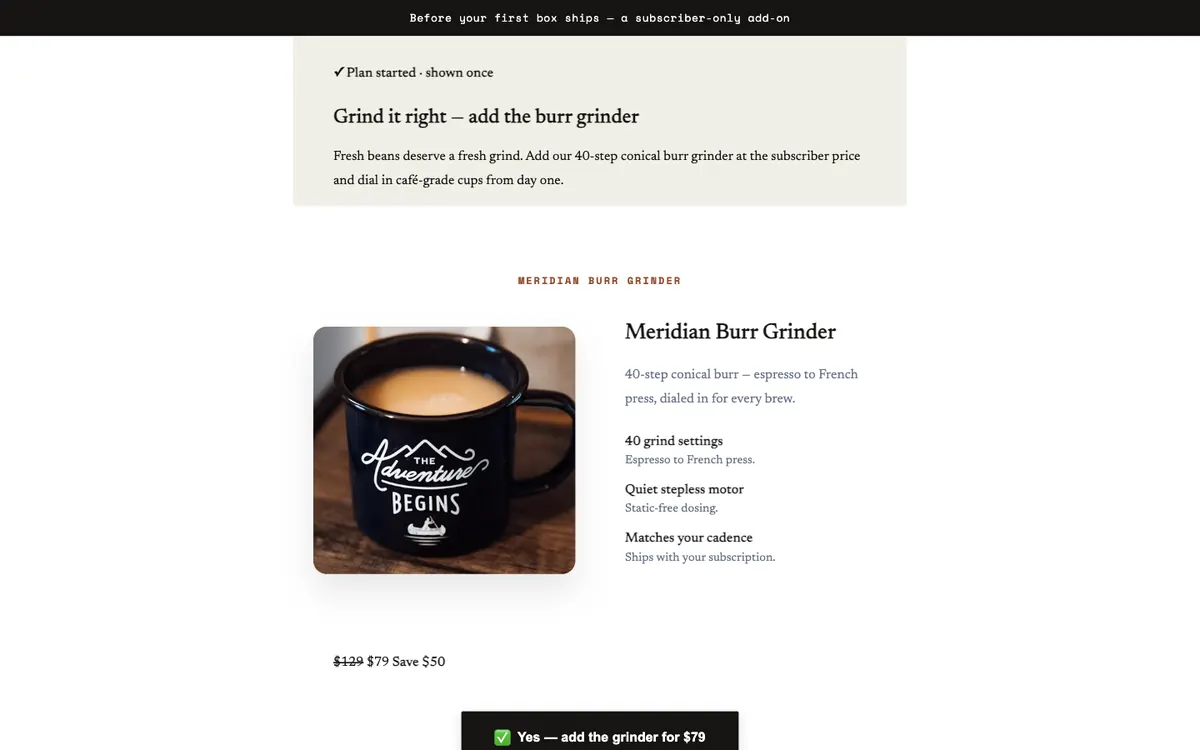
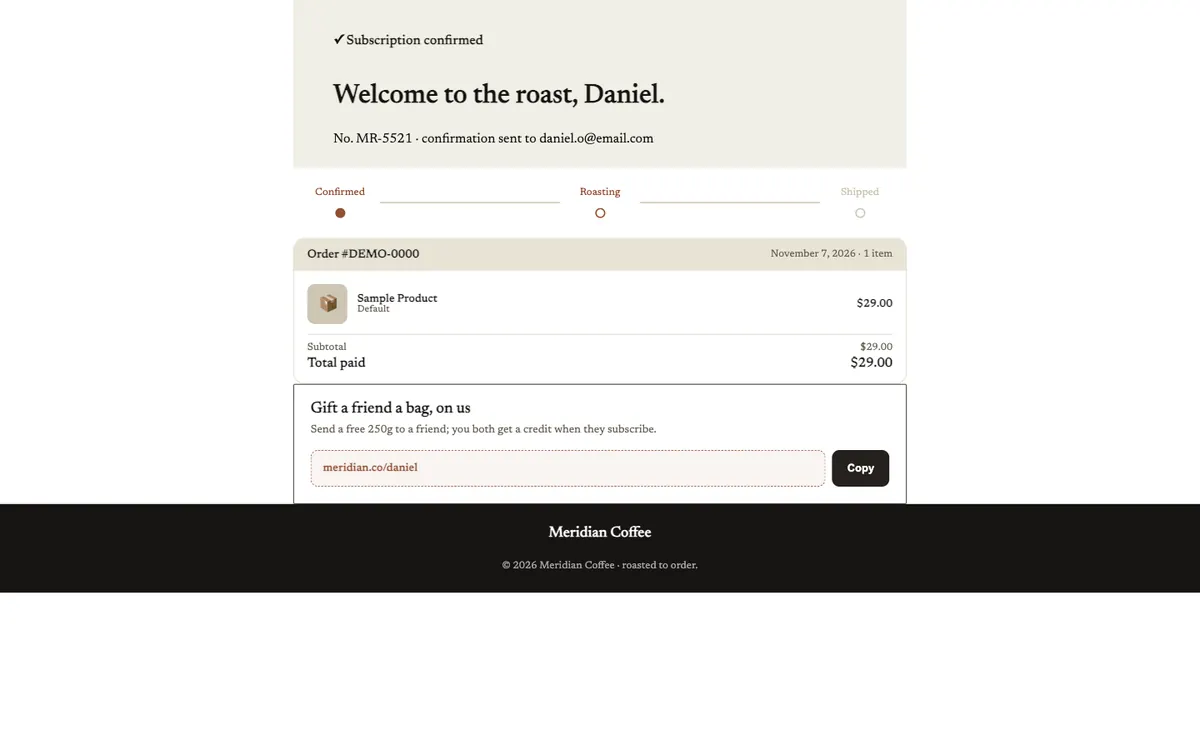
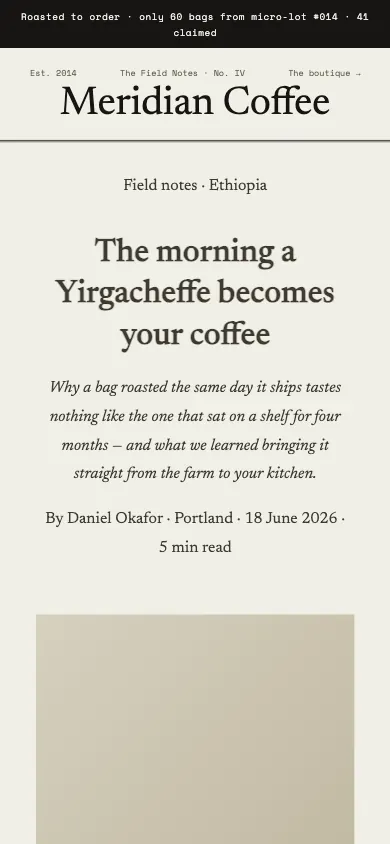
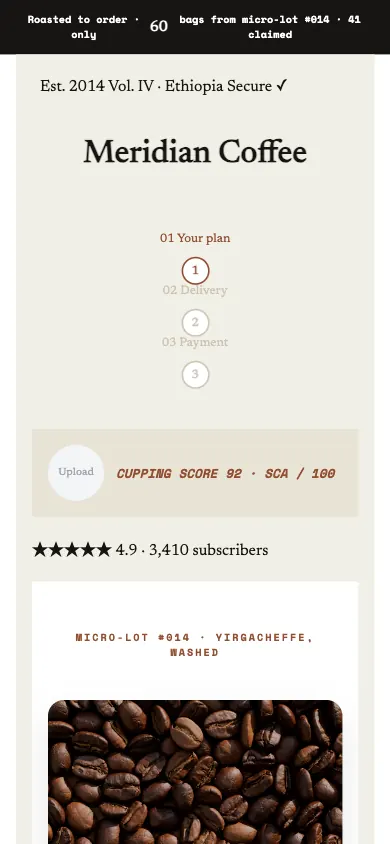
Screenshots are the pack rendered by the Autonnel page renderer with its default sample content, before any store is connected. The payment block reads "Payment Not Configured" until you set up a payment provider. Product names, product artwork, prices, stock counts, ratings, reviews and press mentions in the templates are fictional placeholders that you replace with your own.
Notice bar, site bar, a newspaper-feature block with facts table and cupping score, feature band, guarantee bar, offer callout and footer.
Three-band checkout: scarcity bar and double-rule masthead, a numbered step rail (Your plan, Delivery, Payment), hero band, plan selector (one-time, every 2 weeks, monthly), pre-applied coupon, delivery form, PayPal express, card form and a receipt-style order summary with a "Start subscription" button, then a benefit checklist and a testimonial.
A subscriber-only burr grinder add-on anchored $129 to $79 with a one-click add-to-order button.
Subscription confirmation with a roast timeline (Confirmed, Roasting, Shipped), live order detail and a gift-a-bag referral card.
After purchase, install with the CLI (see CLI install):
npx autonnel install @autonnel/template-meridianThen register it in astro.config:
import { templateMeridianPlugin } from '@autonnel/template-meridian';

autonnel({ plugins: [templateMeridianPlugin()] })
The four templates then appear in the page-create picker under the Funnel section.
Four page templates: a landing page (page type CUSTOM, default slug lp-meridian), a checkout (CHECKOUT, checkout-meridian), a one-click upsell (UPSELL, upsell-meridian) and a thank-you page (THANKYOU, thank-you-meridian). Each one is generated as editable Puck page data, not a locked layout.
Buy it once, run npx autonnel install @autonnel/template-meridian, then add templateMeridianPlugin() to the plugins array of autonnel() in astro.config. The CLI prints the exact snippet and never edits your config itself. After a rebuild the templates show up in the page-create picker under Funnel.
Yes, once you bind it. Bind the plan selector to a real product with one variant per delivery cadence before going live. Payment methods appear after a payment provider is configured in your Autonnel settings.
No. They are sample copy that shows where social proof and scarcity blocks go. Replace them with your own reviews and real numbers, or delete the blocks, before you publish.
The pack declares autonnel >=0.1.0 and only uses public plugin APIs: it contributes namespaced templates and blocks and reuses core blocks, which the host validates when the plugin loads.